


The valley of Loetschental sits at the top of a long climb in the Swiss Alps, and in the summer of 1935 it had no road, no doctor, and no dentist. It did not seem to need one. When a sixty-something dentist from Cleveland arrived with his notebooks and his camera, he went from child to child, tilting their heads toward the light, and found teeth that had never met a toothbrush and almost never met decay. Wide jaws. Straight arches. Bodies raised on rye bread, thick summer cheese, and deep-yellow butter from cows that grazed alpine grass. The man was Weston A. Price, and he had not come to drill. He had come to find people with nothing wrong.
For most of his career Price had done the opposite of this trip. He filled cavities and pulled teeth in an American city where both were multiplying fast, and somewhere along the way he stopped believing the decay was normal. So he closed the practice, packed instruments for measuring rather than mending, and went looking for the healthiest mouths on Earth, on the theory that they still existed somewhere, in places the modern grocery had not yet reached.
A search that circled the globe
Over most of a decade he kept going. He examined fishing families on the Scottish Isle of Lewis who lived on oats and the harvest of a cold sea. He sat with Inuit families in the Arctic whose diet ran to seal, whale, and fish. He visited Maasai herders in East Africa, Aboriginal communities in Australia, villagers in the high valleys of Peru. Everywhere he went he did the same patient work: counting cavities, measuring the width of dental arches, photographing faces, and writing down exactly what people ate.
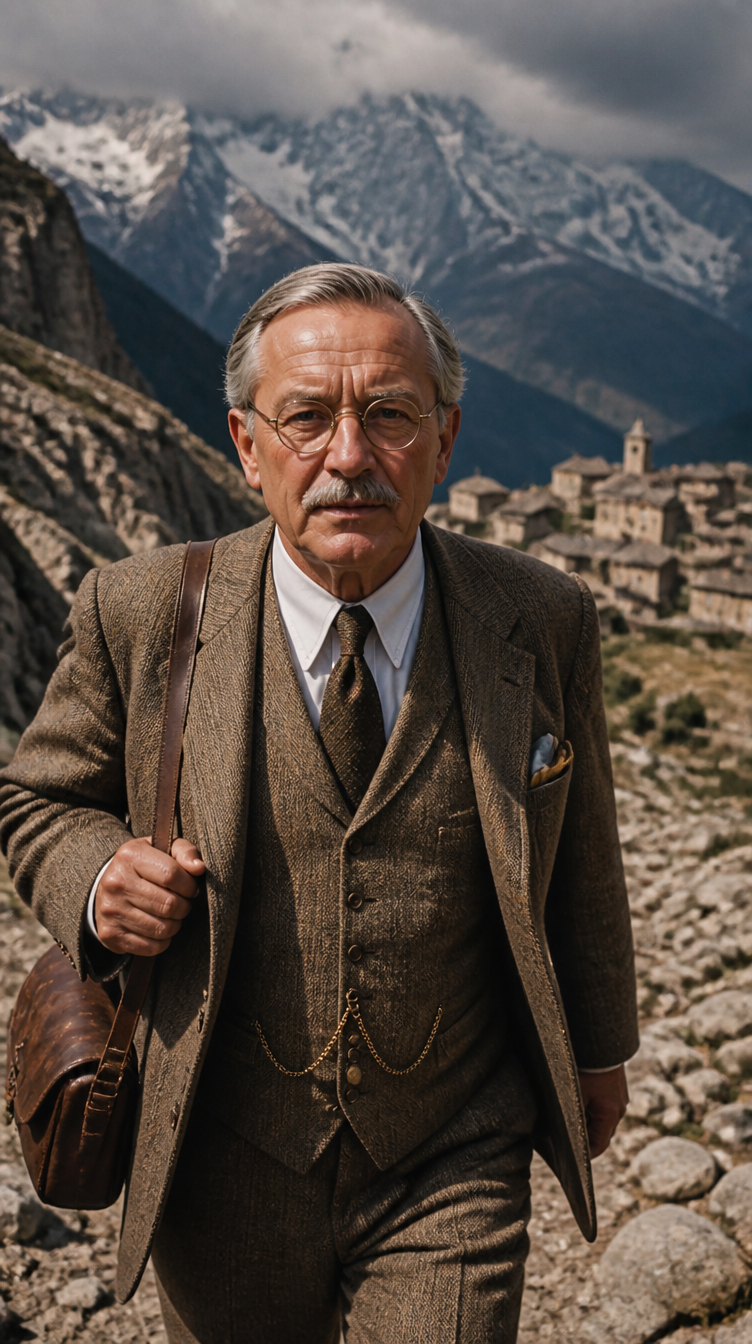
The diets could hardly have been less alike. Alpine dairy in one place, seal fat in another, oats and fish in a third, milk and meat on the African plain. And yet the mouths kept telling the same story. In the isolated communities, tooth decay was rare (often only a handful of cavities across an entire village), and the jaws were broad enough that teeth came in straight, without the crowding and crooked bite Price saw daily back home. It held across continents, climates, and peoples who had never heard of one another.
What the different tables had in common
Price kept turning the puzzle over. If the foods were so different, what was the same? Three things, as far as he could tell. The food was whole and unrefined: nothing arrived in a box or a bag. It was eaten close to the animal, nose to tail, with little wasted. And nearly everywhere, the parts other cultures throw away were the parts these families treasured most. Organ meats, liver above all, were reserved for the people who needed strength: the young, the pregnant, those about to marry. In more than one place, the lean muscle meat went to the dogs while the family kept the liver and the heart.
Back in his laboratory, Price analyzed samples of the foods he had watched people eat and reported that they were far richer in the fat-soluble vitamins (A, D, and what he called a mysterious "Activator X," now widely thought to be vitamin K2) than the refined diet spreading through the modern world. Nutrient density, not any single miracle food, seemed to be the thread.
Then the road came up the valley
The most unsettling part of Price's work was not the healthy villages. It was watching them change. Where a harbor opened or a shop appeared, the modern staples followed: white flour, sugar, canned goods, sweetened condensed milk, factory oils. And within a single generation, in the very same families, the pattern he had documented came apart.

He photographed the children whose parents had grown up on the old food and whose own mouths, raised on the new, were full of decay and crowded into narrower jaws. Same parents. Same bloodline. Same mountain air. The one thing that had changed was what was on the plate. In 1939 he laid it all out in Nutrition and Physical Degeneration, more than five hundred pages of dental charts, food records, and side-by-side photographs. The book has never gone out of print.
Why this is your story too
It is worth being careful here. Price was an observer, not a clinical trialist, and his work is a historical record rather than a prescription. Modern water fluoridation, dental care, and better hygiene have all changed the picture since. But the core observation has aged well, and the road he watched come up the valley eventually reached everyone. It reached your grandparents' kitchen, then your parents', then yours. The refined flour and sugar that were exotic in Loetschental are now the quiet default of most meals. Somewhere along that line, the organ meats that every healthy culture he found had prized quietly disappeared from the table.
The hopeful part is that the fix Price kept pointing to was never a pill or a program. The healthiest people he ever documented did not take vitamins. They ate them: in whole food, and above all in the organ meats almost no one eats anymore.
For the modern question this raises: See do beef organ supplements actually work and why every ancestral culture prized organ meats.

Recommended · Rise Nutrition
Grass-Fed Beef Organ Complex
Liver, heart, kidney, spleen, pancreas and bone marrow from grass-fed, grass-finished cattle, freeze-dried into a simple daily capsule. The most prized foods of every healthy tradition, nothing else. Free shipping on the 2-pack, 30-day guarantee.
Shop the Organ Complex →Save with the 2-Pack →The part of the old table that's hardest to get back
Rise Nutrition exists for stories like this one. Our Grass-Fed Beef Organ Complex is the food Price watched every healthy culture treasure: liver, heart, kidney, spleen, pancreas, and bone marrow from grass-fed cattle, freeze-dried into capsules and nothing else added. It isn't a shortcut or a cure. It's simply the piece of the ancestral plate that modern life made hardest to reach.
If you want to keep it on hand, the 2-pack bundle ships free and carries a 30-day guarantee. Real food, nothing else: the way the healthiest people ever studied always ate it.
Sources & further reading
The studies and historical records behind this piece:
- Weston A. Price, Nutrition and Physical Degeneration (Paul B. Hoeber, 1939): the Lötschental Valley chapter.
