


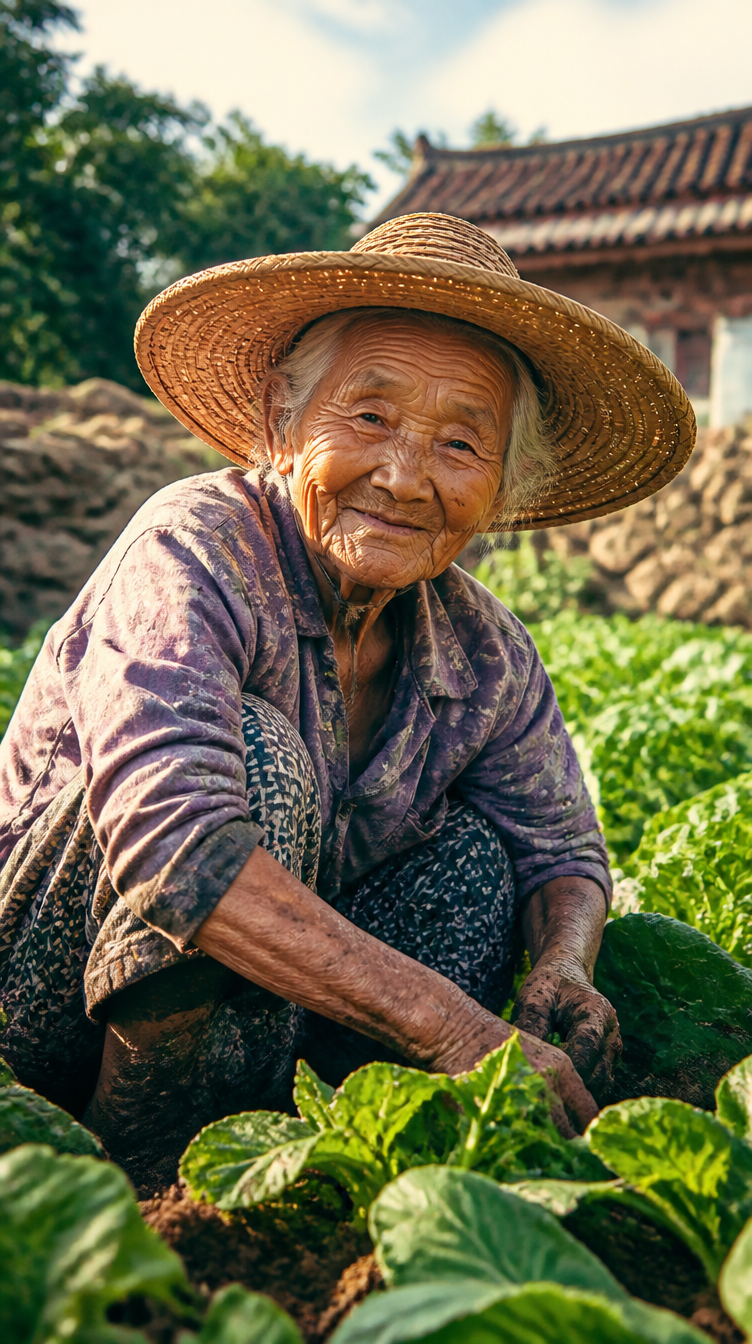
In a village in the north of Okinawa, in the hills above the East China Sea, a woman in her late nineties bends over a row of vegetables she planted herself. Her hands know the soil the way most hands know a spoon. She has outlived two of her own children. For most of the last century, she was not an exception here. She was the pattern.
The island that seemed to forget how to grow old
For decades, Okinawa held a distinction no other place could match: more people living past 100 than almost anywhere on Earth. Researchers with the Okinawa Centenarian Study spent years documenting it: elders in their nineties still working the fields, still walking to see neighbors, still sharp. It was not a rumor or a travel brochure. It was a record, kept in numbers, and the numbers were startling.
What made it stranger was how ordinary the people were. No exotic ritual. No fountain. Just old men and old women who kept doing what their parents had done, on a chain of subtropical islands that had known more than its share of hardship.
It was never a supplement. It was the plate.
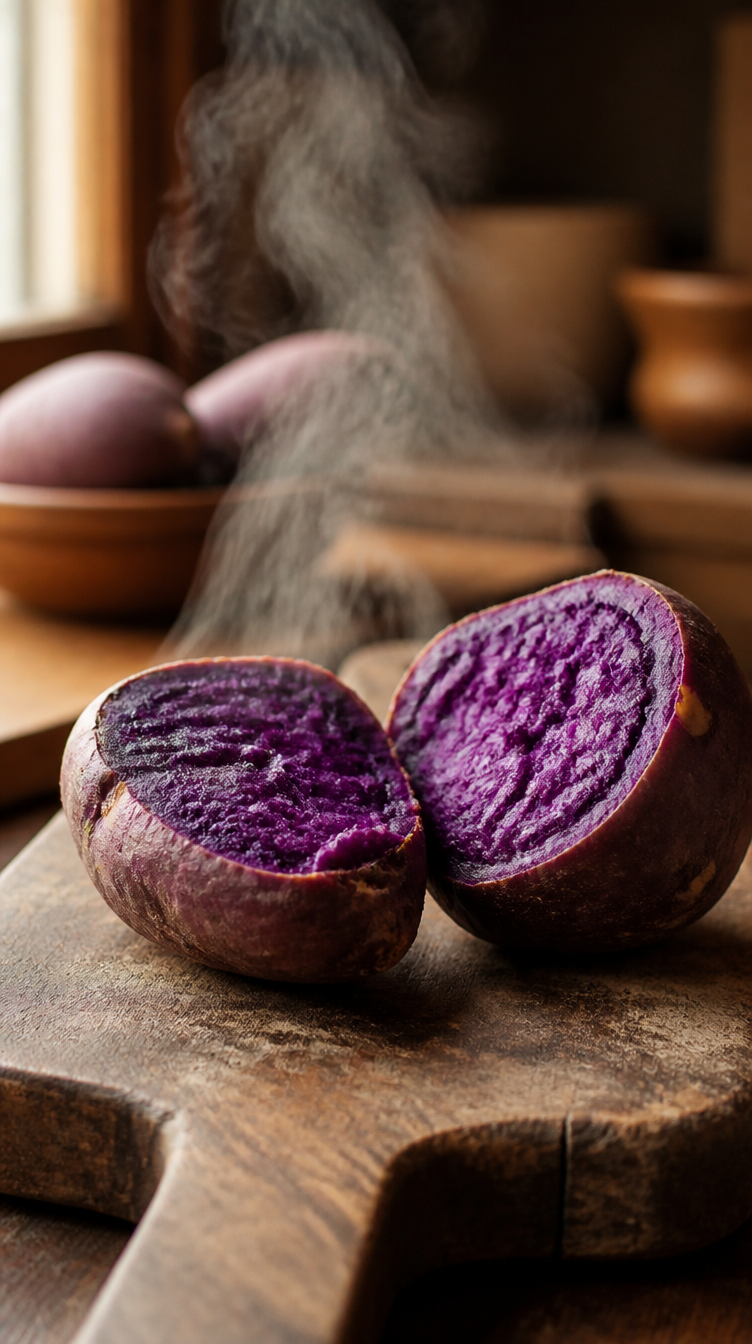
Look at what those elders ate, and the mystery starts to resolve into something almost plain. The traditional Okinawan diet was built around the purple sweet potato: not rice, but the sweet potato, boiled and eaten day after day. Around it sat bitter melon, leafy greens, seaweed, tofu, and only modest amounts of fish and pork, often saved for celebrations. Sugar was scarce. Wheat was scarcer. It was a plate assembled almost entirely from whole food, grown close to home.
There was a habit that went with it, too, a saying repeated before meals: hara hachi bu. Eat until you are eighty percent full, then set down the chopsticks. Not a diet. A discipline of restraint, taught young and carried for life. The elders were not counting anything. They were simply stopping early, every day, for decades.
Then the food changed
After the war, the American military settled into Okinawa and did not leave, and American food came with it. Spam and canned meat. Burgers and fried chicken. Soda in cold glass, then convenience stores glowing on corners where there had been rice paddies. For a generation raised on scarcity, cheap abundant calories were not a threat. They were a relief.
The relief had a cost, and it arrived on a timeline researchers could watch. Within roughly two generations, some of the same islands that once broke longevity records began posting among the worst obesity and metabolic-disease rates in Japan. The younger men, in particular, lost ground their grandparents had held with ease. Same islands. Same ancestry. Same genes. The food was different, and the bodies followed.
The ones who kept the old way
The most quietly damning finding was not about the young at all. It was about the old. The elders who never abandoned the traditional plate (the sweet potato, the greens, the restraint): many of them were, and in some cases still are, simply here. Their bodies ran on what the land handed them, and it carried them further than any pill on any shelf ever has.
This is history, not a prescription, and it should be read honestly. No single food made anyone live to 100, and genes and community and a lifetime of movement all mattered. But the shape of the story is unmistakable, and it is the same shape we find everywhere we look, in every traditional culture that stayed healthy until the modern plate arrived and rearranged it.
The pattern reached your table too
Here is the part that should stop you. What happened to Okinawa did not stay in Okinawa. The same swap (real food quietly traded for engineered convenience) ran through your grandparents' kitchen, and your parents', and it is running through yours right now, in every aisle stacked with things your great-grandmother would not have recognized as food. Okinawa is not a curiosity from far away. It is a fast-forward of the change that already happened to most of the world.
The hopeful half of the record is just as real. Nothing in it required a laboratory or a supplement or a secret. It required a return to the plate: whole food, eaten with a little restraint, most days. That door has not closed. It is still the most evidence-backed bet any of us can make, and it starts with the next meal.
Real food. Nothing else.
You cannot buy Okinawa in a bottle, and we would not pretend to sell it. But the through-line of every long-lived culture we study is the same: nutrient-dense, whole, real food, eaten close to the way nature made it. That is the whole idea behind Rise: the most prized foods of the healthy traditions, and nothing you would need a chemistry degree to pronounce.

Rise Nutrition
Grass-Fed Beef Organ Complex
Liver, heart, kidney, spleen, pancreas and bone marrow from grass-fed cattle, freeze-dried into capsules. The most prized foods of every healthy tradition, nothing else. Free shipping on the 2-pack, 30-day guarantee.
Shop Organ Complex →Shop the 2-Pack →
Related to this story
Grass-Fed Gelatin Powder
The long-lived ate nose-to-tail, including the collagen-rich cuts most people skip today. Our grass-fed gelatin is that same connective-tissue nourishment, in a spoonful. Nothing added.
Shop Gelatin →Keep Reading
Sources & further reading
The studies and historical records behind this piece:
- Willcox BJ, Willcox DC, Suzuki M. The Okinawa Program (Clarkson Potter, 2001), the Okinawa Centenarian Study.
